
Last Updated: March 10., 2026
Many riders want to take their dirt bikes beyond the trail and onto public roads, but they aren’t always sure where to begin.
Preparing an off-road motorcycle for road use involves both mechanical upgrades and proper documentation. While the process may seem intimidating at first, most riders with moderate mechanical skills and basic tools can complete many of the required modifications themselves.
In this guide we’ll cover:
Essential equipment commonly required for public-road riding
How to upgrade your charging system to support additional components
Optional upgrades that improve safety, convenience, and performance
With the right preparation, turning your dirt bike into a road-ready machine can be a rewarding project.

One of our customers on their street legal KTM 525 EXC.
Understanding Requirements and Common Misconceptions
There are many myths surrounding the process of preparing a dirt bike for public-road use.
Some riders believe the bike must have been originally manufactured for road use. Others assume that simply installing a headlight and taillight is enough.
In reality, the process involves meeting equipment standards, ensuring the motorcycle can safely operate in traffic, and completing the required registration and titling paperwork.
Because these requirements vary by state, it’s important to research local rules before beginning a conversion project.

Essential Components for Public-Road Riding
The following equipment is commonly required for motorcycles used on public roads.
Requirements can vary by state, so always confirm local regulations before riding.

Headlight
Most states require a DOT-compliant headlight that:
Switches between high and low beam
Remains visible during both day and night
Provides adequate illumination without blinding other drivers
LED headlights are a popular upgrade because they consume significantly less power than halogen lights. This can help reduce strain on the motorcycle’s electrical system.
Switch placement requirements may vary, but the control is typically installed on the left handlebar for easy access.

Tail Light and Brake Light
A properly functioning tail light allows drivers behind you to see your motorcycle and recognize when you’re slowing down.
Many modern tail light assemblies combine multiple functions:
Tail light
Brake light
Turn signals
License plate illumination
In some states the lighting system must remain illuminated even when the engine is off for a short period, which may require a battery.
LED lights again help reduce electrical demand.
Brake lights should activate from both:
Front brake lever
Rear brake pedal
Hydraulic brake switches or mechanical switches are commonly used to accomplish this.

Mirrors
Most states require at least one working mirror, though some require two.
Mirrors improve rider awareness by allowing you to monitor traffic behind you.
Options include:
Standard threaded mirrors
Bar-end mirrors
Wide-angle mirrors for increased visibility
While minimalist mirrors may look appealing, stability and visibility are more important for road safety.

Turn Signals
Some states allow hand signals instead of turn signals.
However, installing turn signals is still recommended because they:
Increase visibility
Improve communication with drivers
Allow riders to keep both hands on the handlebars
LED signals are a good choice due to their low power consumption.

DOT-Rated Tires
Motorcycles used on public roads typically require DOT-certified tires.
These tires are designed to withstand higher speeds and extended pavement use.
Dirt bike wheels can usually accept DOT-rated tires, which are marked “DOT” on the sidewall.
Many riders also convert their bikes into supermoto setups, installing 17-inch wheels and road-focused tires for improved pavement performance.

Horn
Most states require a functioning horn.
While some areas allow mechanical horns, installing a small electric horn is the simplest and most reliable solution.
Electric horns are inexpensive and usually draw minimal power from the electrical system.

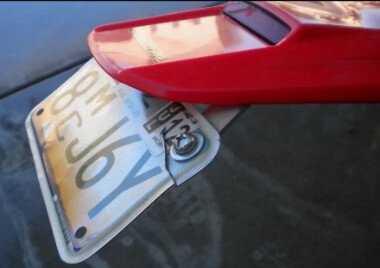
License Plate Mount
Motorcycles operating on public roads must display a license plate.
Requirements vary regarding:
Plate placement
Lighting
Mounting position
Many aftermarket brackets make installation straightforward and help ensure the plate remains visible from the rear of the bike.
Upgrading the Charging System
One of the most overlooked aspects of dirt bike conversions is the electrical system.
Off-road motorcycles often have minimal electrical output because they were designed primarily for trail use.
When adding headlights, brake lights, signals, and other components, the charging system may require upgrades.
Stator
The stator generates electricity for the motorcycle.
Bikes designed for off-road riding may produce limited power, which may not be enough for additional lighting and accessories.
Upgrading or rewinding the stator can increase power output.

Regulator/Rectifier
This component converts alternating current (AC) from the stator into direct current (DC) that electrical components can use.
It also regulates voltage to protect the battery and electronics.

Battery
While some dirt bikes operate without batteries, adding one provides several advantages:
Stable power for lighting
Operation while idling
Improved reliability for accessories
Compact batteries designed for off-road motorcycles are widely available and easy to install.

Optional Upgrades
These components are not always required but can significantly improve comfort and usability.
Odometer or Digital Display
A digital gauge can provide:
Speed readings
Engine temperature
Mileage tracking
Trip distance
These features help riders monitor fuel usage and maintenance intervals.

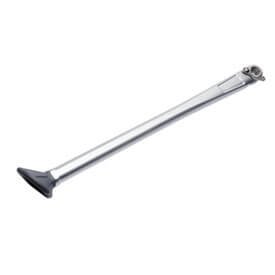
Kickstand
Many off-road bikes lack kickstands, but they are extremely convenient when riding in urban environments.
Adding one makes parking and everyday use much easier.
Street-Oriented Gearing
Changing sprocket sizes can improve the motorcycle’s performance on pavement by increasing top speed or adjusting acceleration.
Selecting the right gearing depends on how the motorcycle will be used.
Cooling Fan
Because dirt bikes are designed to remain in motion on trails, they may overheat when idling in traffic.
Installing a cooling fan helps maintain safe engine temperatures during slower riding conditions.
Resource: check out our article All You Need To Ride A Street Legal Dirt Bike In Your State

Preparing the Paperwork
Beyond mechanical upgrades, preparing a dirt bike for public-road riding also involves documentation and registration.
Because requirements vary from state to state, the process can involve complex paperwork and multiple agencies.
For riders dealing with missing titles, off-road conversions, or unusual vehicle situations, services like Dirt Legal provide guidance designed to simplify the process and help riders navigate registration requirements with greater clarity.
Want more details on how we register your dirt bike?
From our website, simply choose your vehicle service, then fill out the form with your vehicle information. After your purchase, you will receive a welcome packet in the mail. Complete the enclosed forms and send them back to Dirt Legal in the pre-paid envelope provided, then wait for your tag, registration and/or title to arrive in the mail as fast as possible!
We offer a 100% money-back guarantee if we fail to make your dirt bike street legal.
That’s why Dirt Legal is the most trusted source for this unique service. We have dealt with the most complex situations and can often get a street legal tag and title in your home state, which is something most people struggle to do on their own.
California friends: wondering why you should title your dirt bike out-of-state instead of dealing with red and green stickers? Read this and find out.


Dirt biking remains a vibrant and evolving culture as we head into 2025. Gas-powered bikes continue to see steady, incremental improvements, while electric dirt bikes are rapidly advancing with lighter components, longer battery life, and impressive torque. Legislative efforts like House Resolution 906 aim to empower riders with the right to repair their own vehicles, fostering independence within the community. Despite restrictive state regulations, dirt biking culture thrives, with growing sales and creative solutions like Montana LLC registration ensuring riders can hit the trails legally. The future of dirt biking is a blend of tradition, innovation, and resilience.